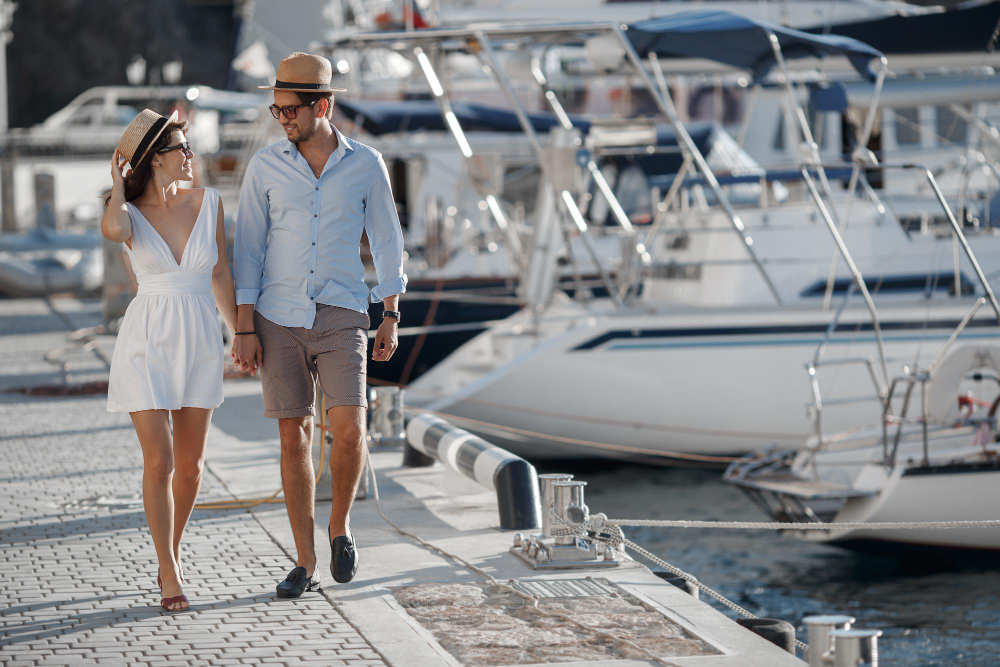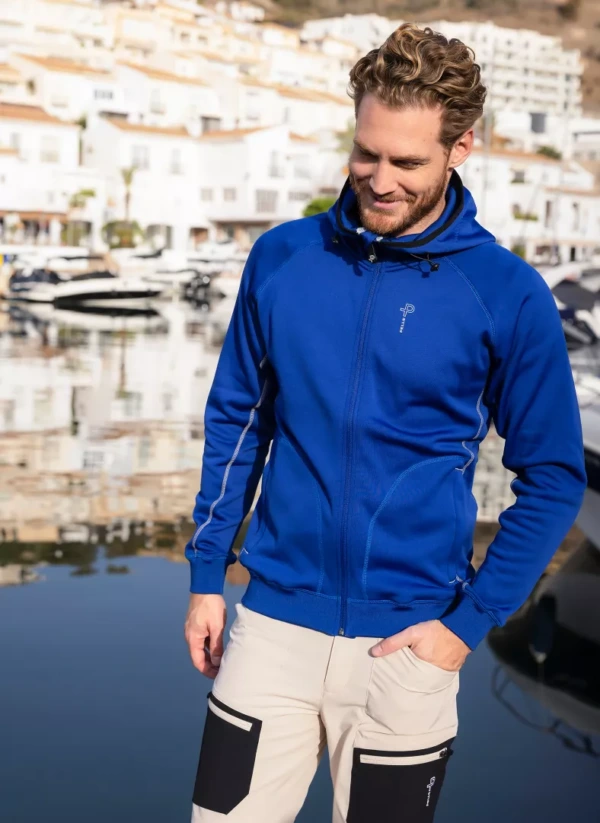
Why do experienced sailors smile in stormy weather while beginners shiver below deck? The secret lies not in toughening up, but in the conscious choice of equipment. Proper clothing is just as critical at sea as working navigation equipment – it keeps you warm, dry, and ready for action in any weather.
Dressing for the sea differs significantly from regular hiking or a beach holiday because weather conditions can change in minutes and dampness is a constant companion. Below, we review the three-layer system and share recommendations based on maritime traditions and modern technology.
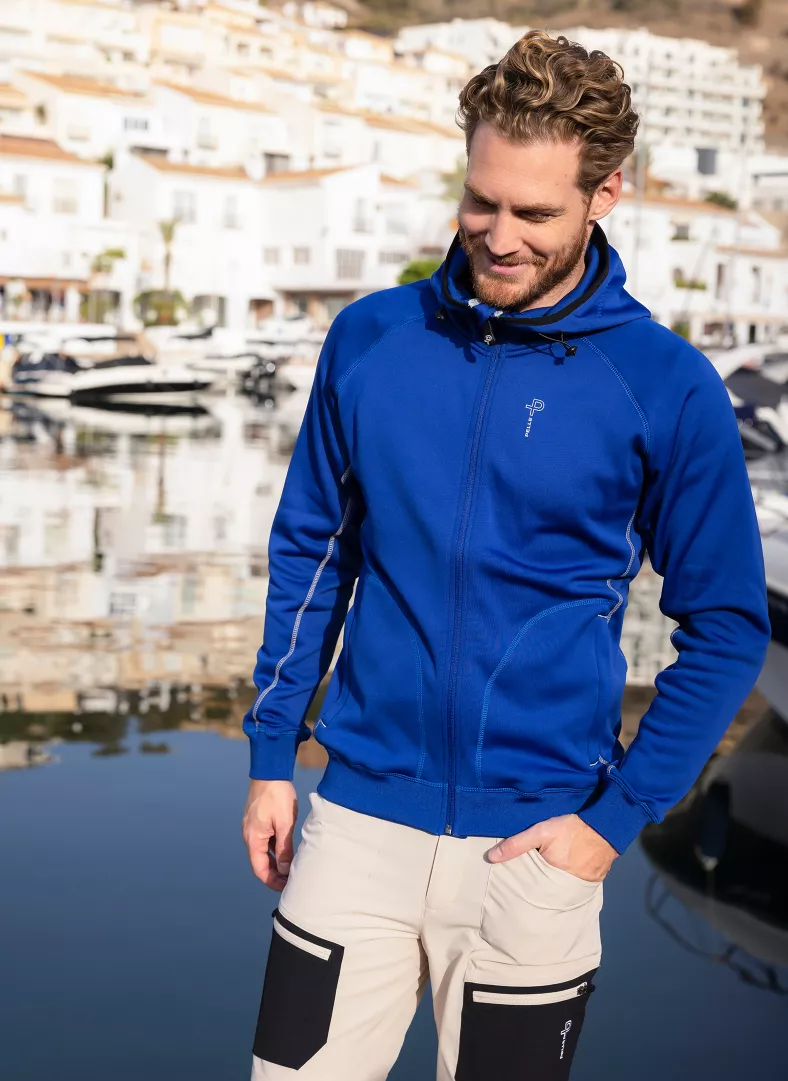
The Three-Layer System: Your Personal Microclimate
The most important principle at sea is layered clothing. This gives you the flexibility to regulate your body temperature according to your activity level and the weather. Scientific research and maritime practice confirm that several thin and loose layers retain warmth better than one thick garment, allowing the body to regulate temperature more effectively. This system only works if the materials are chosen correctly and function as a cohesive unit.
1. Base Layer: Moisture Management
Everything begins with the layer immediately against the skin. The main task of the base layer is to wick sweat and moisture away from the body to the subsequent layers. It must be made of synthetic material, such as polyester, or merino wool. Avoid cotton at all costs, as it absorbs moisture and cools you down quickly when wet, creating a sensation of cold.
Synthetic materials are often preferred for active sailing because they dry quickly with the help of body heat, offering warmth even when you have gotten wet. In the summer, UV-protective and quick-drying shirts are an excellent choice, protecting you from the scorching sun.
2. Mid Layer: Thermal Insulation
The mid layer, or insulation layer, traps body heat. Here, the best choices are fleeces or high-quality sweaters. Fleece is valued among sailors for its lightness, softness, and high heat retention even in damp conditions. It is important to ensure that the mid layer is not too tight-fitting, but allows air to move between the layers.
Our men’s technical clothing and women’s technical clothing offer a wide range of solutions that are ideal for the mid layer. In cooler weather, knitwear with a windproof lining is particularly practical. Take a closer look at our men’s windproof and women’s windproof collections, which protect you from the cool sea breeze even when a jacket isn’t needed at that moment.
3. Outer Layer: Protection from the Elements
The outer layer is your shield against wind, rain, and waves. It must be breathable and waterproof. Look for jackets with taped seams and waterproof zippers – these details ensure optimal protection against moisture ingress. The choice depends largely on where you are sailing.
Men’s sailing clothes and women’s sailing clothes designed for coastal cruising are usually lighter and have a lower collar, ensuring greater freedom of movement. Longer offshore passages require storm gear with higher collars and stronger materials. Historically, it was Henri Lloyd who changed nautical clothing forever by introducing taped seams and nylon zippers, which replaced old and heavy lacquered garments. In simpler cases, if an unexpected downpour hits you in the harbor or on a short trip, a lighter rain cape can also be helpful.
Keep Your Feet Warm and Dry
It is often forgotten that feet need just as much care as the upper body. A practical tip from experienced sailors: a warm layer on the legs often has a greater effect on overall body temperature than adding a third sweater to the upper body. Therefore, it is worth wearing thermal underwear or fleece trousers under your pants in cooler weather.
Good sailing trousers should be made of durable material, have reinforced seat and knee areas, and naturally be quick-drying. Visit our general sailing category to find models that meet your specific needs and can withstand climbing on deck as well as salt water.
The Right Footwear Ensures Safety
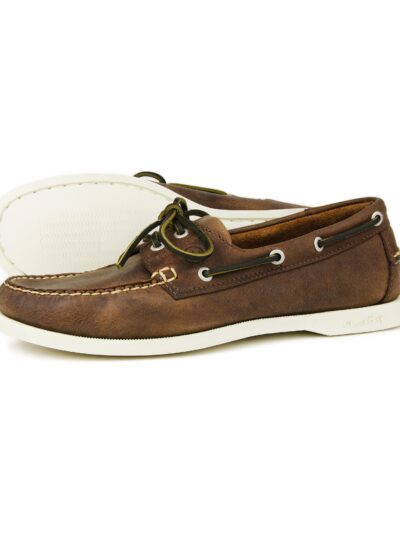
Slipping is one of the biggest dangers at sea. Your footwear must have a special light-colored or “non-marking” sole that does not leave streaks on wooden or plastic decks and ensures a firm grip on wet surfaces. Ordinary sneakers can turn into ice skates on a wet deck.
Classic leather boat shoes that have been treated to withstand seawater are suitable for summer cruising. For cooler weather or sportier sailing, choose more technical boots that keep feet dry even in choppy waves. Check out the selection in the footwear for men and footwear for women categories to find a pair that matches your style and needs.
Accessories You Can’t Do Without
Small things matter more at sea than you might think. Since a large amount of body heat is lost through the head, a proper hat is indispensable at sea – even on cooler summer evenings. Gloves are also important, protecting hands from the abrasion of ropes and sheets, and keeping fingers warm so you can tie knots quickly and precisely when needed.
Your next sea voyage could be the best experience of your life if you are ready for the weather conditions. Review your wardrobe, invest in quality layers, and enjoy the sea in any weather. Visit the Nautical Store e-shop to find suitable gear for your next adventure – by subscribing to the newsletter, you get a 10% discount on your first purchase.