Marine Clothing Maintenance: A Practical Guide to Keeping Your Equipment in Top Shape for Years

Have you ever noticed that your expensive, once fully waterproof jacket feels damp inside or heavy after just a few seasons? Often, the issue isn’t the quality of the jacket or an aging membrane, but rather salt crystals lodged in the fabric’s pores and improper care. Marine clothing is an investment – a high-quality storm jacket or technical shell will serve you faithfully for years, but only if you care for it properly and consistently.

In this guide, we’ll look in detail at how to clean and maintain your gear at home, which mistakes to avoid at all costs, and when it’s worth turning to a professional.


Man and woman on a sailboat in stormy seas, wearing technical waterproof sailing jackets

Why Does Seawater Require Special Care?

Seawater is an aggressive environment for clothes, primarily due to salt. Salt crystals are hydrophilic, meaning they absorb moisture. When salt dries into the fabric fibers or the pores of a technical membrane, it keeps the garment constantly damp and prevents it from breathing. The result is a situation where you feel sweaty and cold even inside a perfectly intact waterproof jacket because body moisture cannot escape.

Additionally, modern sailing clothing – whether men’s sailing clothing or women’s sailing clothing – is mostly coated with a DWR (Durable Water Repellent) layer. This is an invisible finish that makes water “bead up” and roll off the fabric. Dirt, body oils, sunscreen, and general abrasion break down this layer over time.

The high-quality shell jackets and raincoats below require regular cleaning and renewal of the DWR layer to maintain their peak performance and keep you dry in even the harshest storms.

Home Maintenance: A Step-by-Step Action Plan

Many sailors are afraid to wash their technical clothing, mistakenly believing that the washing machine will ruin the waterproofing. In reality, dirt and salt are far more damaging to the membrane than proper washing. Experts recommend washing gear every 10–12 days of use for intensive activity, less frequently for casual hobbies, but definitely at the end of the season.

1. Preparation is Half the Battle

Before putting the garment in the washing machine, rinse it with fresh water if possible, especially if you’ve just come from the sea. This helps remove the bulk of the salt and sand that could damage the machine or the fabric. Carefully close all zippers and Velcro straps. Loose Velcro can rub against the technical fabric during washing and cause irreversible damage (“fuzzy” spots). Also, loosen all drawstrings on the hood and hem.

2. The Right Washing Routine

This is the most critical part of the process: do not use regular laundry detergent or fabric softener. Standard household chemicals leave residues on the fabric that attract water and ruin the fabric’s water repellency. Always use a specialized technical detergent (e.g., Nikwax Tech Wash or Grangers Performance Wash) designed for waterproof membranes.

Wash clothes in the machine at 30°C or 40°C, always checking the care instructions on the label. Choose a gentle cycle (e.g., synthetics or sportswear). Rinse thoroughly – some experienced maintainers even recommend a double rinse cycle to be absolutely sure all detergent residues are removed.

3. Restoring Water Repellency (Re-proofing)

If you notice water no longer beads on the jacket’s surface but absorbs into the fabric, making it dark, it’s time to renew the DWR layer. This can be done in two main ways. The first option is a wash-in product, where you add the impregnating agent to the washing machine during a separate cycle. This is convenient but covers the entire garment, including the inner lining.

The second, and often preferred option for lined jackets, is a spray-on product. Spray the agent evenly onto the damp, clean jacket, paying special attention to the shoulders and hood. This method ensures the waterproof layer forms only on the outer surface and does not reduce the lining’s breathability.

4. Drying and Activation

Heat is often needed to activate the DWR layer. If the care label allows, place the item in the dryer on a low temperature for about 20 minutes. The heat helps align the molecules and restores water repellency. If a dryer cannot be used, let the garment air dry and later use an iron on low heat, making sure to place a towel between the jacket and the iron to avoid melting the fabric.

Investing in timeless classics, like Henri-Lloyd jackets, ensures that such care guarantees their longevity and presentable appearance for many years.

Common Mistakes to Avoid at All Costs

Even experienced sea dogs can unknowingly damage their gear. The biggest enemy is fabric softener. It is the death of technical clothing, as it clogs the microscopic pores of the membrane and irreversibly destroys waterproofing and breathability.

Another danger is water that is too hot or ironing at high temperatures. High heat can melt the seam tapes that keep the jacket waterproof. A third common mistake is leaving wet and salty clothes sitting in a bag. In a damp and salty environment, mold develops quickly, and the fabric begins to degrade due to hydrolysis.

Material-Specific Tips: Wool and Windproof

Seafaring isn’t just about shell jackets. Sailors often love wearing warm sweaters with windproof lining at sea and in the harbor. Our popular Windproof collections for men and women require a different approach than rain jackets.

Since wool is naturally self-cleaning and antibacterial, simply airing the item in fresh air is often enough. If washing is unavoidable, be sure to use the wool cycle and a special wool detergent containing lanolin. Never use the spin cycle at full power, and always dry woolen items laid flat, not hanging – this way, the sweater retains its shape.

Here are some of our customers’ favorites that need just this kind of care and offer warmth in the windiest weather.

When to Turn to a Professional?

Although home care is usually sufficient, there are situations where it pays to trust specialists. If you notice that the internal seam tapes are peeling off or there is a hole in the waterproof layer, home remedies may no longer help. Also, heavy stains like oil or rust may require professional chemical cleaning that knows how to treat technical fabrics correctly.

Well-known brands like Henri-Lloyd and Pelle Petterson create products to last, but professional repair can give an old favorite a new life, saving both nature and your wallet.

Marine gear maintenance isn’t rocket science, but a natural part of a sailor’s routine. Wash out the salt, use the right products, and regularly restore water repellency – this way, you’ll stay warm and dry at sea. Check your gear and evaluate if it’s ready for the next season. If you discover that an old jacket has served its time, you’ll find a wide selection of high-quality men’s outerwear and women’s outerwear in our e-shop, designed to withstand the changing conditions of the Baltic Sea.
Marine Clothing Materials: How to Choose Fabric That Keeps You Dry and Warm

Have you ever stood soaked on deck wondering why your “waterproof” jacket still let the rain through? At sea, clothing isn’t just a matter of style, but a guarantee of your comfort and safety. In this guide, we clarify what the numbers on the labels mean and which fabric suits your adventures best.

Marine clothing materials

Waterproofing and Breathability: The Science of Membranes

Modern sailing clothing has come a long way from the days when sailors wore heavy and cumbersome oilskins. At the heart of modern gear are membrane fabrics, like the renowned Gore-Tex or Pelle P Hi:res® technology. These materials are designed to work similarly to your skin: they don’t let external water in but allow body moisture and sweat to evaporate. This is a critical feature because if moisture gets trapped under clothes, the body starts to cool down regardless of the jacket’s thickness.

Historically, Henri-Lloyd was one of the pioneers to introduce taped seams and non-corrosive nylon zippers. This innovation permanently made marine clothing lighter, more durable, and more waterproof, replacing earlier lacquered clothing with the technical excellence we enjoy today.

What to Look for on Product Labels?

When choosing a jacket from our sailing category, it is worth paying attention to two main indicators: water column and breathability. The water column is measured in millimeters and indicates the material’s water resistance under pressure. A range of 5,000–10,000 mm is perfect for light rain and coastal walking, while 10,000–20,000 mm is a good choice for coastal sailing in changeable weather. For serious offshore sailing and extreme conditions, the number should exceed 20,000 mm.

Breathability is just as important, indicating how much moisture the fabric lets through. The more active the activity on board, such as hauling sheets during a race, the higher the breathability number should be. Our women’s sailing clothing and men’s sailing clothing offer options reaching up to 30,000 mm waterproofing, ensuring maximum protection even in the harshest storms.

Raincoats and Urban Style

You don’t always need a storm-proof membrane. If you are looking for something simpler for a rainy walk on the quay or in the city, PU (polyurethane) coated fabrics or EVA material are excellent choices. These materials are completely waterproof and very easy to maintain. Although their breathability is lower than technical sailing jackets, they offer excellent protection against downpours and a stylish look for everyday wear.

Windproof Knitwear: Innovation in Heat Retention

At sea, wind is often a greater enemy than water, because strong wind cools the body many times faster than just low temperature. A regular wool sweater is warm, but the wind blows right through it. This is where products from the Windproof category come to the rescue, combining classic style with modern technology.

The secret of these knits lies in the lining. The outer layer of the sweater is often made of high-quality wool or cotton blend, but underneath hides an elastic and breathable lining that is completely windproof. This technology allows you to enjoy the traditional sailor look without having to wear a separate shell jacket to stay warm. It is the ideal solution for chilly evenings both at sea and on land.

Insulation: Down vs. Synthetic

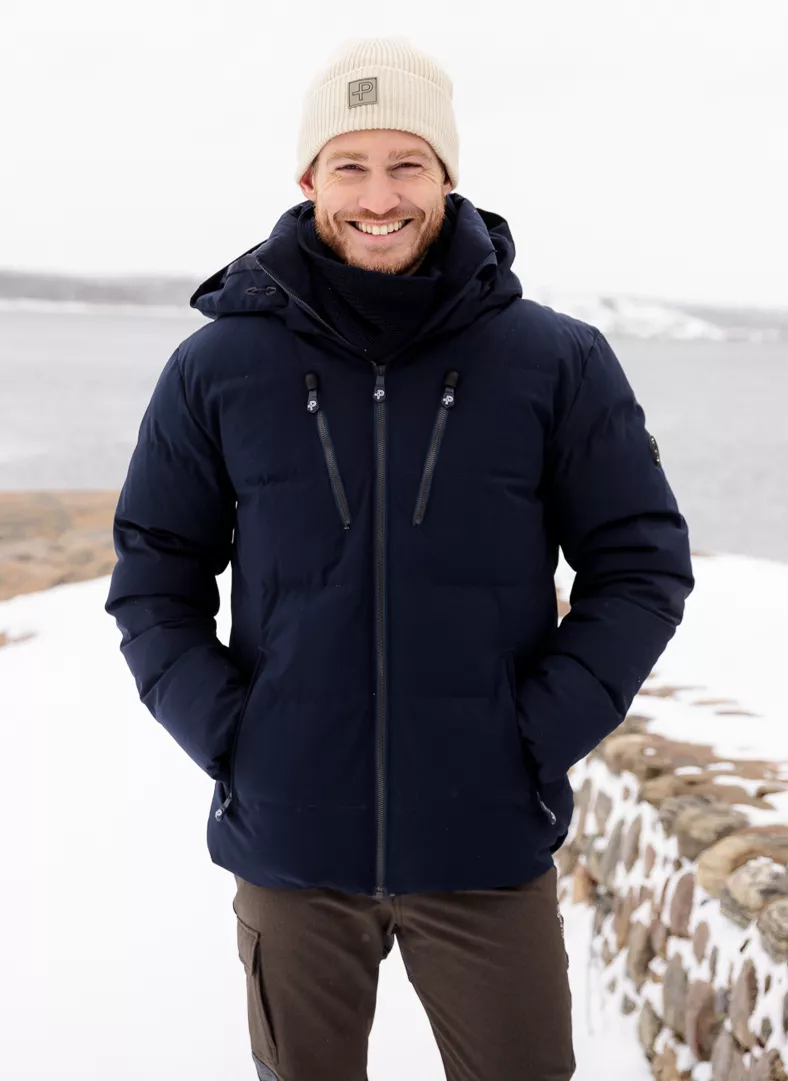
In colder weather or during the early spring season, a proper thermal layer is necessary under women’s technical clothing and men’s technical clothing. Here, the choice is mostly between down and synthetics. Down offers an unbeatable warmth-to-weight ratio, being ideal for dry and cold weather.


Synthetic insulation, such as Primaloft or Sorona, mimics the properties of down but possesses a critical advantage at sea: it retains heat retention even when the material gets wet. Since moisture is always a factor at sea, jackets and coats with synthetic filling are often a more practical choice for the active sailor who doesn’t want to worry about weather conditions.

Special Purpose Materials: Neoprene and Merino Wool

The layers closest to the body largely determine your comfort level. An old truth says that cotton is undesirable at sea as it absorbs moisture and cools the body. Instead, the best choice is merino wool. This miracle of nature keeps you warm even when wet and is naturally antibacterial, meaning clothes stay fresh longer even on long sea voyages.

Another indispensable material, especially if there is a risk of falling into the water or if there is a lot of spray, is neoprene. Neoprene acts as an insulator, trapping a thin layer of water or air in the material’s pores, which is then warmed by body heat. This makes neoprene products ideal for dinghy sailors or those sailing in colder conditions.

How to Care for Your Gear?

High-quality marine clothing is an investment that serves you for years if cared for correctly. Improper washing can ruin the waterproof layer or clog the breathable membrane, turning an expensive jacket into an ordinary plastic bag. The first and most important rule is salt removal: rinse clothes with fresh water immediately after sailing, as salt damages fabrics and zippers. Warm water dissolves salt crystals better than cold water.

Be careful when washing. Wash waterproof clothing on a gentle cycle (up to 40°C) and use a detergent specifically designed for technical clothing. Never use fabric softeners, as they break down the fabric’s waterproof coatings (DWR) and UV protection. After washing, it is recommended to dry the clothes in a tumble dryer at a low temperature (if the care label permits), as heat helps restore the fabric’s water-repellent properties. However, wash neoprene products by hand and dry them in the shade so the sun doesn’t make the material brittle.

Regardless of whether you choose gear from our women’s category or men’s category, knowing the material properties is the first step towards a more enjoyable sea voyage. With the right gear, every weather is sailing weather.

Clothing for a Sailing Trip: How to Stay Warm and Dry at Sea

Why do experienced sailors smile in stormy weather while beginners shiver below deck? The secret lies not in toughening up, but in the conscious choice of equipment. Proper clothing is just as critical at sea as working navigation equipment – it keeps you warm, dry, and ready for action in any weather.

Dressing for the sea differs significantly from regular hiking or a beach holiday because weather conditions can change in minutes and dampness is a constant companion. Below, we review the three-layer system and share recommendations based on maritime traditions and modern technology.

Young woman and man on board a sailing yacht on the Baltic Sea, wearing layered sailing clothing in windy weather

The Three-Layer System: Your Personal Microclimate

The most important principle at sea is layered clothing. This gives you the flexibility to regulate your body temperature according to your activity level and the weather. Scientific research and maritime practice confirm that several thin and loose layers retain warmth better than one thick garment, allowing the body to regulate temperature more effectively. This system only works if the materials are chosen correctly and function as a cohesive unit.

1. Base Layer: Moisture Management

Everything begins with the layer immediately against the skin. The main task of the base layer is to wick sweat and moisture away from the body to the subsequent layers. It must be made of synthetic material, such as polyester, or merino wool. Avoid cotton at all costs, as it absorbs moisture and cools you down quickly when wet, creating a sensation of cold.

Synthetic materials are often preferred for active sailing because they dry quickly with the help of body heat, offering warmth even when you have gotten wet. In the summer, UV-protective and quick-drying shirts are an excellent choice, protecting you from the scorching sun.

2. Mid Layer: Thermal Insulation

The mid layer, or insulation layer, traps body heat. Here, the best choices are fleeces or high-quality sweaters. Fleece is valued among sailors for its lightness, softness, and high heat retention even in damp conditions. It is important to ensure that the mid layer is not too tight-fitting, but allows air to move between the layers.

Our men’s technical clothing and women’s technical clothing offer a wide range of solutions that are ideal for the mid layer. In cooler weather, knitwear with a windproof lining is particularly practical. Take a closer look at our men’s windproof and women’s windproof collections, which protect you from the cool sea breeze even when a jacket isn’t needed at that moment.

3. Outer Layer: Protection from the Elements

The outer layer is your shield against wind, rain, and waves. It must be breathable and waterproof. Look for jackets with taped seams and waterproof zippers – these details ensure optimal protection against moisture ingress. The choice depends largely on where you are sailing.

Men’s sailing clothes and women’s sailing clothes designed for coastal cruising are usually lighter and have a lower collar, ensuring greater freedom of movement. Longer offshore passages require storm gear with higher collars and stronger materials. Historically, it was Henri Lloyd who changed nautical clothing forever by introducing taped seams and nylon zippers, which replaced old and heavy lacquered garments. In simpler cases, if an unexpected downpour hits you in the harbor or on a short trip, a lighter rain cape can also be helpful.

Keep Your Feet Warm and Dry

It is often forgotten that feet need just as much care as the upper body. A practical tip from experienced sailors: a warm layer on the legs often has a greater effect on overall body temperature than adding a third sweater to the upper body. Therefore, it is worth wearing thermal underwear or fleece trousers under your pants in cooler weather.

Good sailing trousers should be made of durable material, have reinforced seat and knee areas, and naturally be quick-drying. Visit our general sailing category to find models that meet your specific needs and can withstand climbing on deck as well as salt water.

The Right Footwear Ensures Safety

Slipping is one of the biggest dangers at sea. Your footwear must have a special light-colored or “non-marking” sole that does not leave streaks on wooden or plastic decks and ensures a firm grip on wet surfaces. Ordinary sneakers can turn into ice skates on a wet deck.

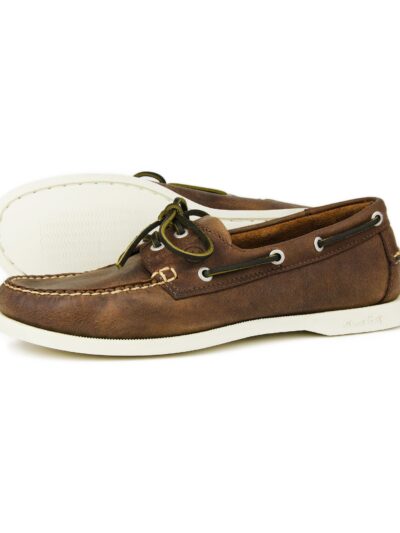
Classic leather boat shoes that have been treated to withstand seawater are suitable for summer cruising. For cooler weather or sportier sailing, choose more technical boots that keep feet dry even in choppy waves. Check out the selection in the footwear for men and footwear for women categories to find a pair that matches your style and needs.

Accessories You Can’t Do Without

Small things matter more at sea than you might think. Since a large amount of body heat is lost through the head, a proper hat is indispensable at sea – even on cooler summer evenings. Gloves are also important, protecting hands from the abrasion of ropes and sheets, and keeping fingers warm so you can tie knots quickly and precisely when needed.

Your next sea voyage could be the best experience of your life if you are ready for the weather conditions. Review your wardrobe, invest in quality layers, and enjoy the sea in any weather. Visit the Nautical Store e-shop to find suitable gear for your next adventure – by subscribing to the newsletter, you get a 10% discount on your first purchase.

How to Work Nautical Style into Your Everyday Wardrobe: A Practical Guide

Some styles never fade; they just get more comfortable with time. Nautical style has long since moved beyond the exclusive domain of sailors. It’s a perfect blend of practicality and elegance that works just as well in the office as it does on city streets. Here is how to inject a bit of maritime freshness into your daily rotation without looking like you’re wearing a costume.

Stylish man in nautical attire at a marina at sunset

A Historic Legacy in Your Closet

Before we dive into styling, it’s worth remembering that this look is deeply rooted in naval history. Many items we take for granted today started as functional gear in the 19th century. For example, the iconic striped shirt was adopted as the official uniform of the French Navy in 1858. The original design featured exactly 21 stripes, which legend claims represented Napoleon’s victories—though historians generally dismiss this as a myth.

However, it was Queen Victoria who brought the look to the mainstream in 1846 when she commissioned a sailor suit for her four-year-old son, sparking a maritime craze across society. Later, in the 1920s, Coco Chanel revolutionized fashion by introducing striped shirts and wide-legged trousers to women’s wear, cementing them as symbols of elegance and liberation.

The Three Pillars: Color, Material, and Pattern

You don’t need a captain’s hat to add a touch of the sea to your outfit. You just need to stick to three principles that have stood the test of time.

First, master the palette. The classic nautical trio is simple and timeless: navy blue, white, and red. These colors come directly from naval uniforms and still work perfectly today. For daily wear, navy blue is your safest base—it looks professional and pairs with almost anything. Red works best as an accent—think scarves, socks, or subtle detailing on a jacket—while white adds contrast and a crisp, fresh feel.

The second key element is the stripe, essentially the fingerprint of nautical style. The right striped shirt transitions seamlessly from an office blazer to a casual harbor café. Just keep an eye on proportions: finer stripes tend to look more formal, while wider bands feel sportier and more relaxed.

Third, never overlook the fabric. Historically, wool was a sailor’s best friend because of its natural lanolin, which kept wearers warm even when wet. Today, high-quality knitwear is still indispensable, though modern pieces often incorporate advanced technical features for extra comfort.

How to Style It: From City to Sea

Nautical style is incredibly versatile, allowing you to curate looks for anything from a board meeting to a beach walk.

Smart Casual – Office and City

This is where function meets form. For men, a great combo is a high-quality knit with minimal branding—like a boat-neck sweater—paired with a crisp dress shirt and beige chinos. For women, a navy blue dress is a timeless classic, especially when elevated with a quality silk scarf. In cooler weather, this look is both cozy and polished.

Sporty-Marine – Active Leisure

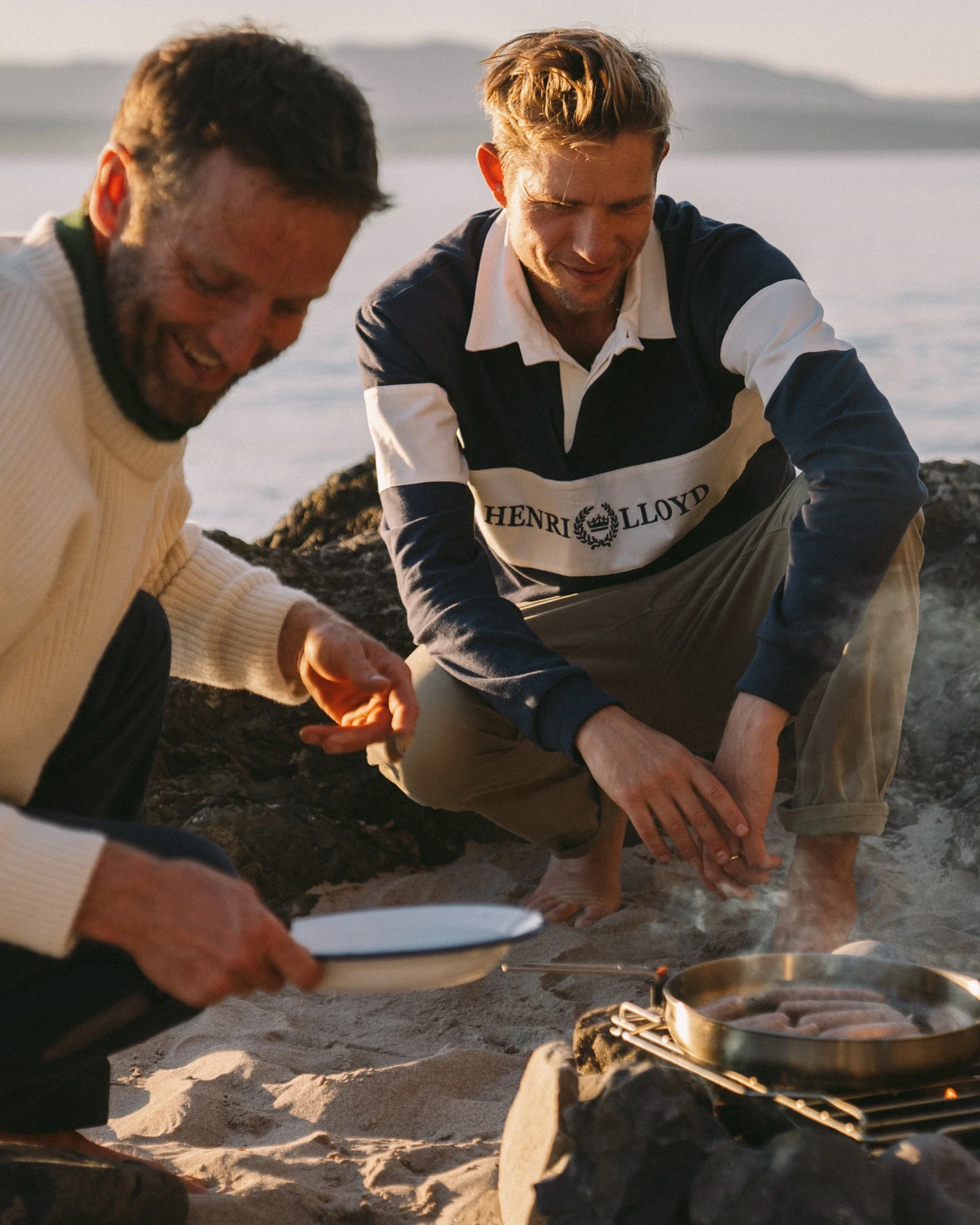
Here, the focus shifts to comfort and tech. A pioneer in this space is Henri Lloyd, a brand that brought innovations like non-corrosive zippers and waterproof taped seams to the sailing world. For a relaxed weekend outfit, grab a technical polo or rugby shirt, comfortable trousers, and a light sweatshirt. It’s the kind of gear that has your back if a sunny day suddenly turns stormy.

Seasonal Advice

In the fickle Estonian climate, your clothes need to be ready for anything. Fortunately, nautical style offers solutions for every season.

In summer, linen is king. A linen shirt is essential; it breathes well and dries fast, making it the ideal choice for hot days. For men, pairing a linen shirt with shorts and classic deck shoes creates an effortlessly elegant vibe.

During the tricky transition months of spring and autumn, wind resistance is key. A sweater with a windproof lining often works better than a jacket, offering warmth without the bulk. Men can pair a windproof sweater with jeans and leather boots, while women can rely on layering—combining a warm jacket or sweatshirt with a thermal base layer.

Care Tips to Make It Last

To keep your nautical gear looking sharp for years to come, follow a few simple rules. Don’t over-wash your woolens, especially sweaters with windproof linings. Wool is naturally self-cleaning, so simply airing it out is often enough. If you must wash it, always use the wool cycle and a specialized detergent.

For technical fabrics found in many sailing clothes, avoid fabric softener entirely. Softener clogs the pores of the material, killing its breathability. Finally, if your clothes have been exposed to sea spray, rinse them in fresh water even if you aren’t doing a full wash immediately. Salt is corrosive and will eventually damage fibers and zippers if left unchecked.

Nautical style is more than just clothing—it’s a nod to tradition and a sign that you value quality and are ready for the next adventure.

Check out our selection and find your new favorites: