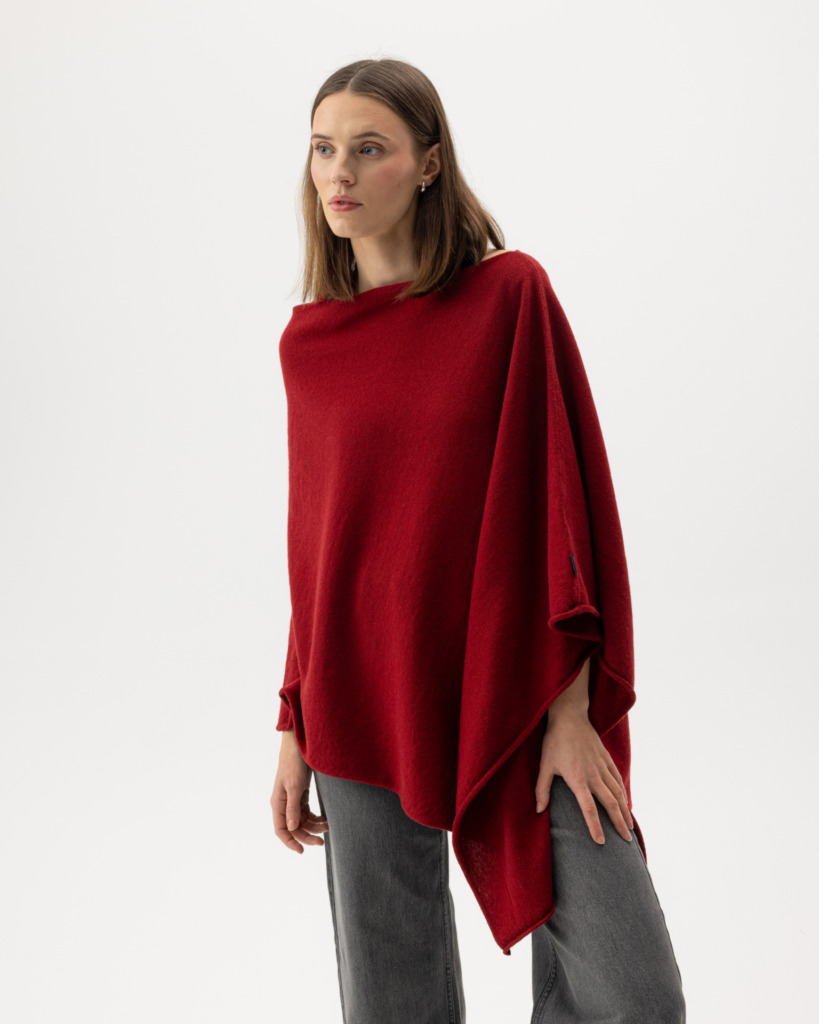
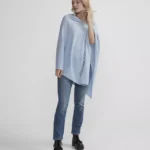
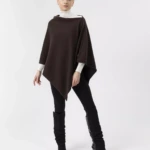
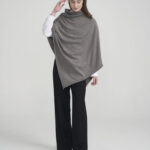
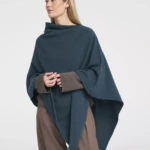
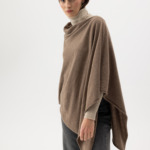
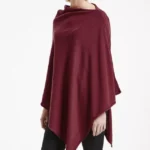
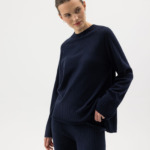
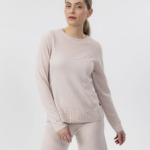
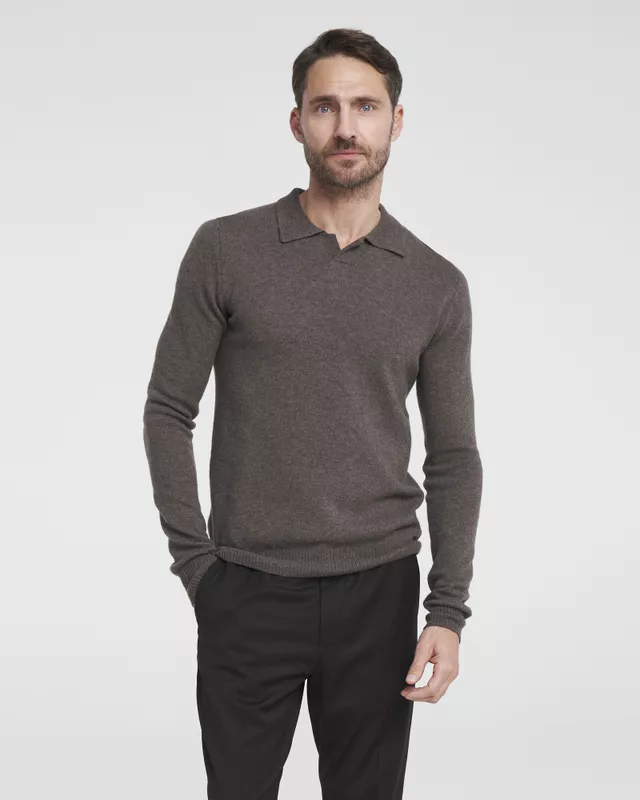
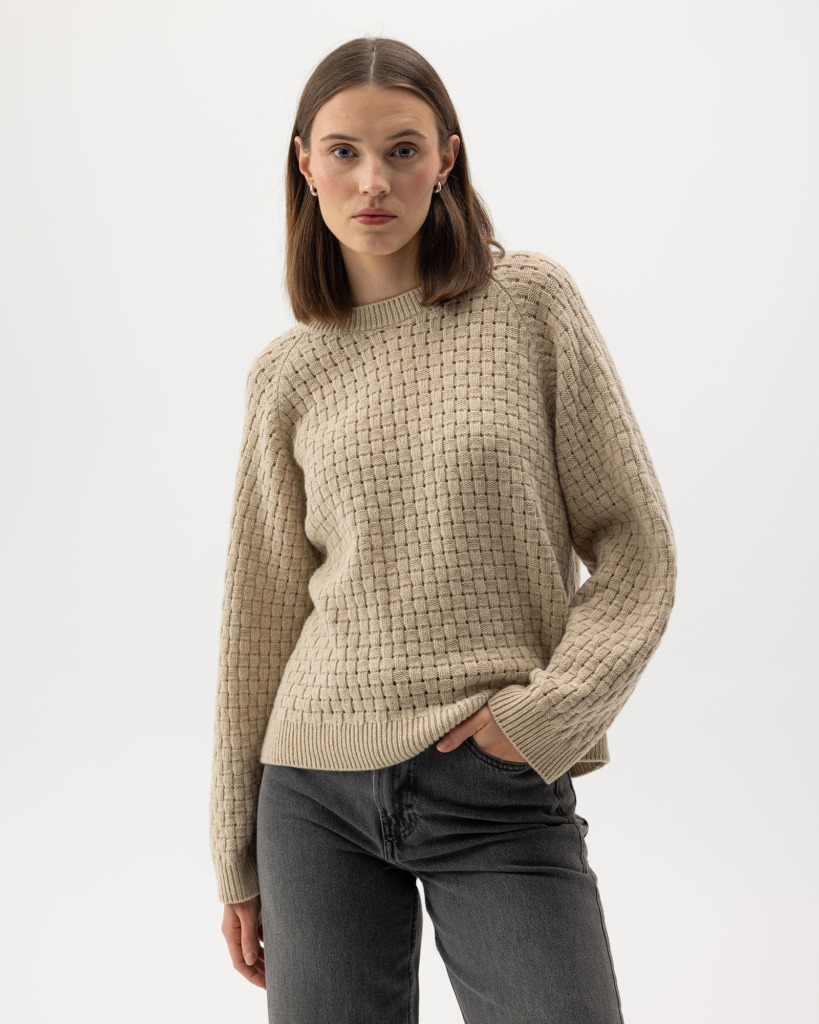
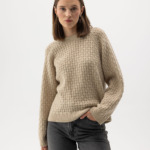
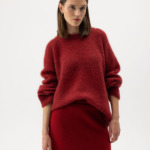
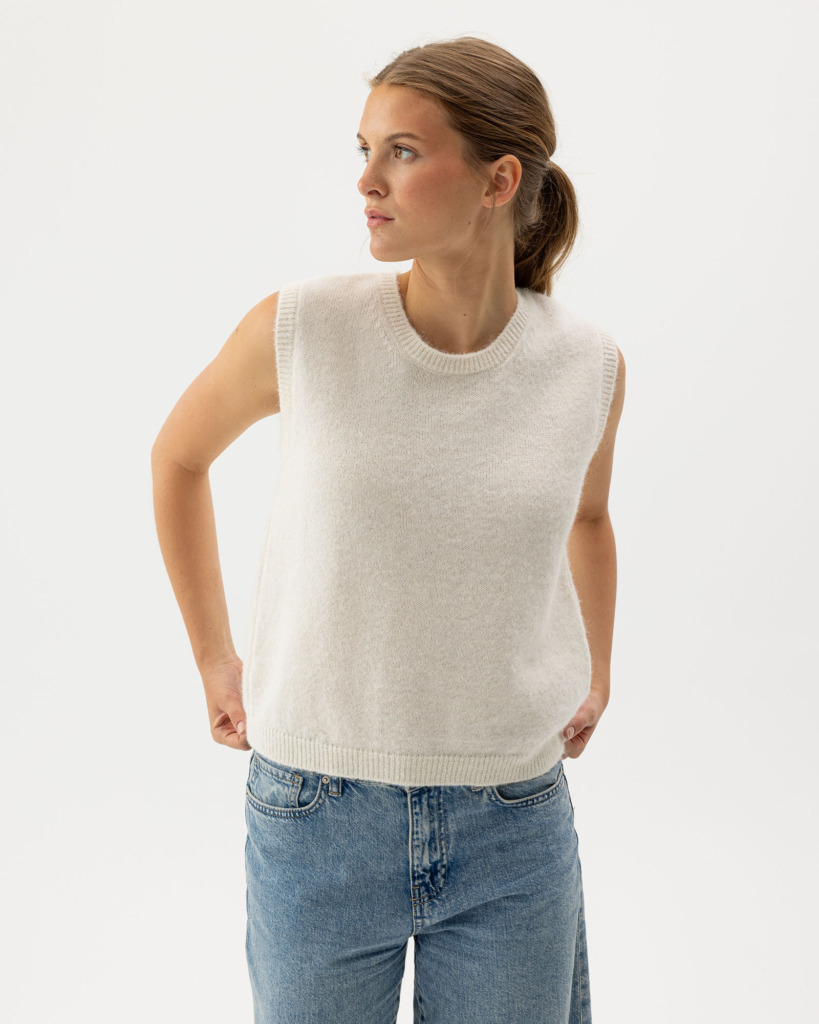
That scratchy, uncomfortable feeling often associated with wool isn’t caused by the fiber itself—it comes down to fiber thickness. Finding your ideal piece depends on your skin sensitivity, the climate, and how you plan to layer. This guide explores the defining qualities of merino wool, mohair, and alpaca to help you choose the perfect knitwear for your wardrobe.
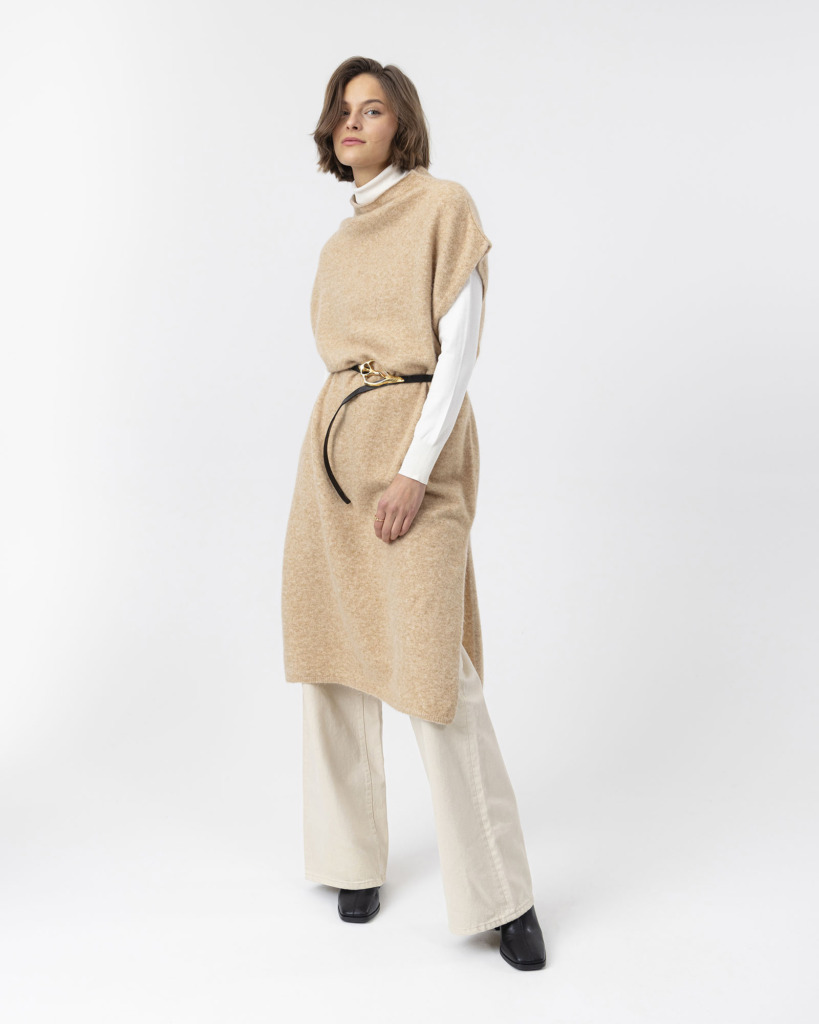
Merino wool remains a quintessential choice for daily outfits and versatile layering. Unlike traditional sheep’s wool, which features coarser strands, merino fibers are exceptionally fine—typically measuring between 15 and 24 microns. Because these delicate fibers bend effortlessly against the skin, they eliminate scratchy mechanical irritation. Read more about whether merino wool is itchy to understand how fiber architecture affects skin comfort.
Beyond its silky hand-feel, merino wool acts as a natural climate control system. It can absorb up to 35% of its dry weight in moisture without feeling damp or chilled against the skin, offering exceptional breathability through crisp autumn afternoons and warmer days alike. Learn more in our article on wearing merino wool in warm weather.
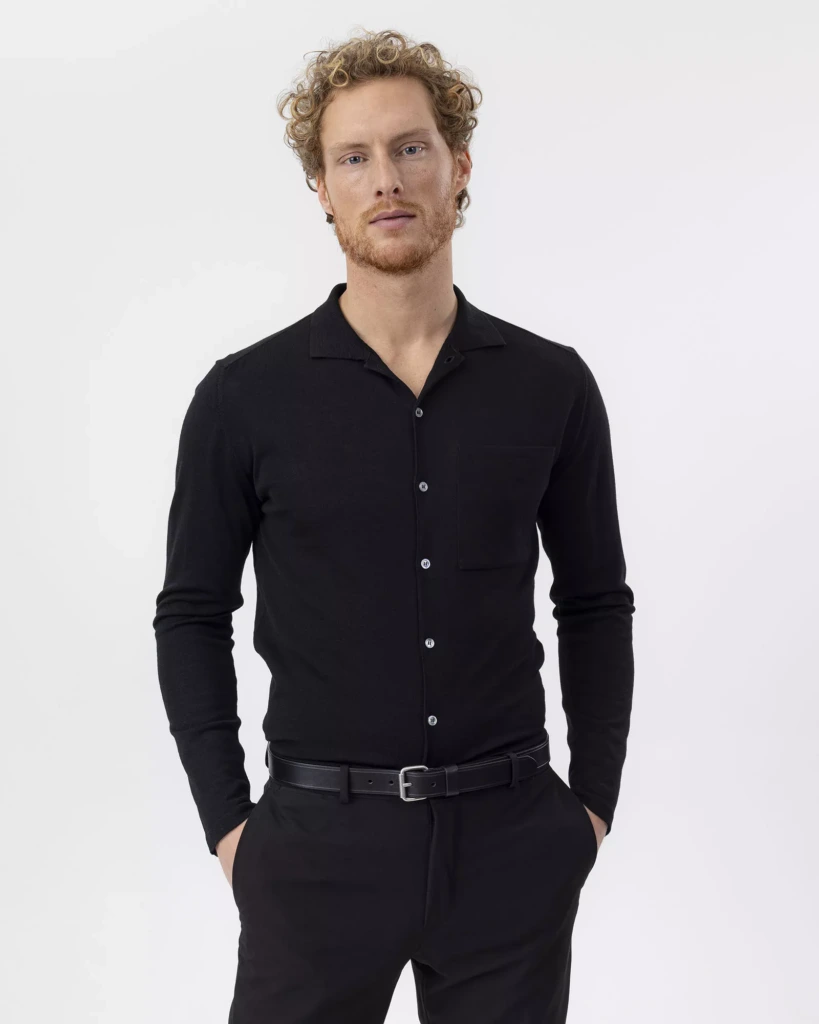
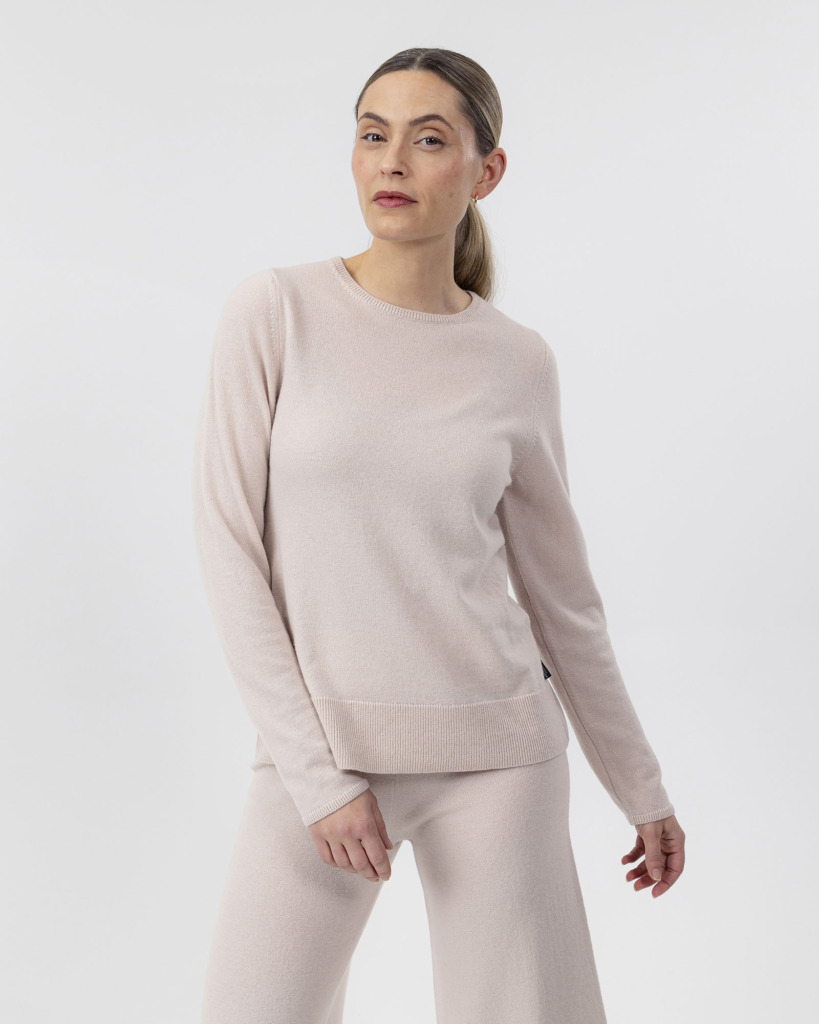
Thanks to the natural elasticity and bounce of its fibers, both men’s merino wool sweaters and women’s merino knitwear retain their tailored shape and refined finish over years of wear.
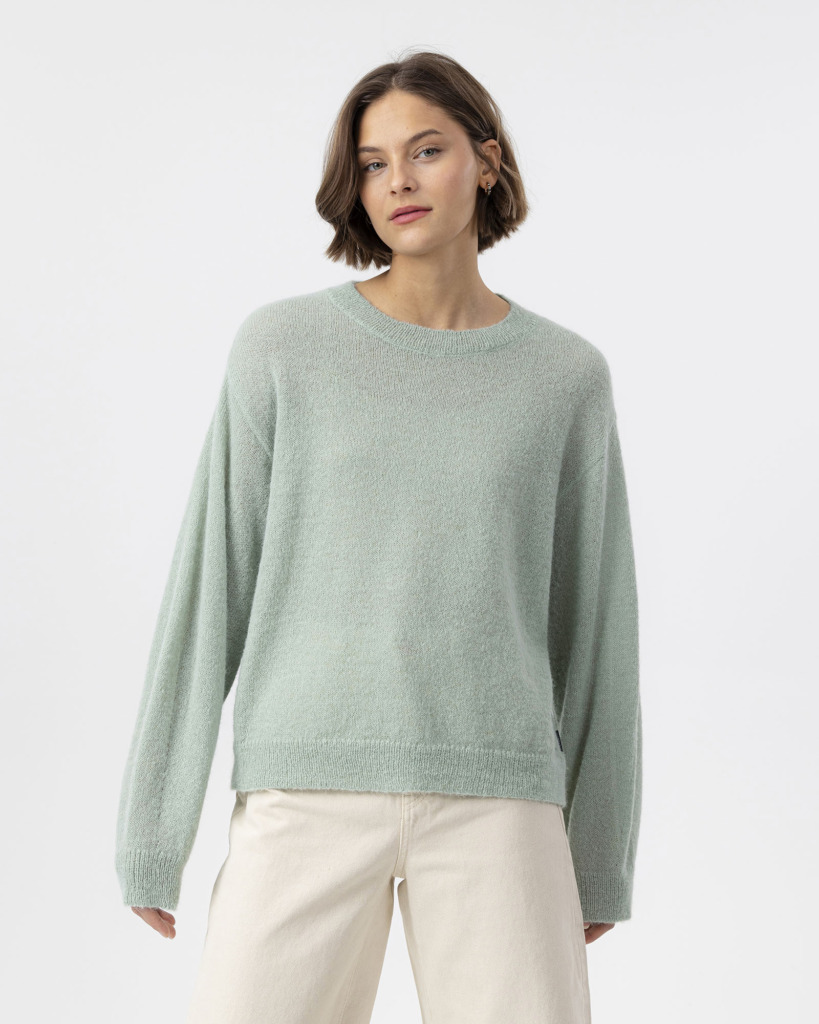
Sourced from Angora goats, mohair is celebrated for its silky luster, cloud-like lightness, and signature fluffy texture. Mohair fibers are smoother and feature fewer scales than standard sheep’s wool, yielding an exceptionally light yet deeply insulating knit. This makes it a sophisticated choice for layering—whether you’re taking a breezy coastal walk or spending an evening out in town.
Mohair fibers are exceptionally resilient, resisting both shrinkage and pilling over time. While soft to the touch, its characteristic long halo (the fine, brushed outer fibers) can occasionally feel tactile to those with hyper-sensitive skin. For this reason, mohair works brilliantly as a stylish outer layer worn over a crisp shirt or base top. Explore the selection further in our guide to women’s mohair blends.
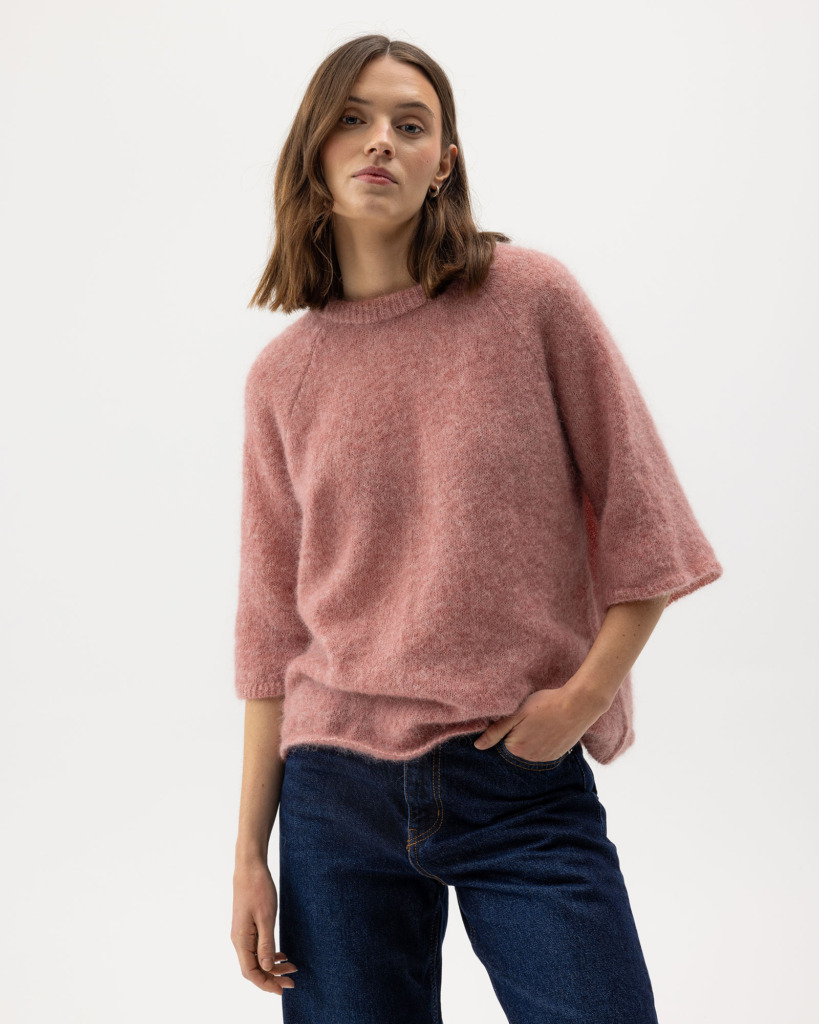
This product is currently out of stock and unavailable.
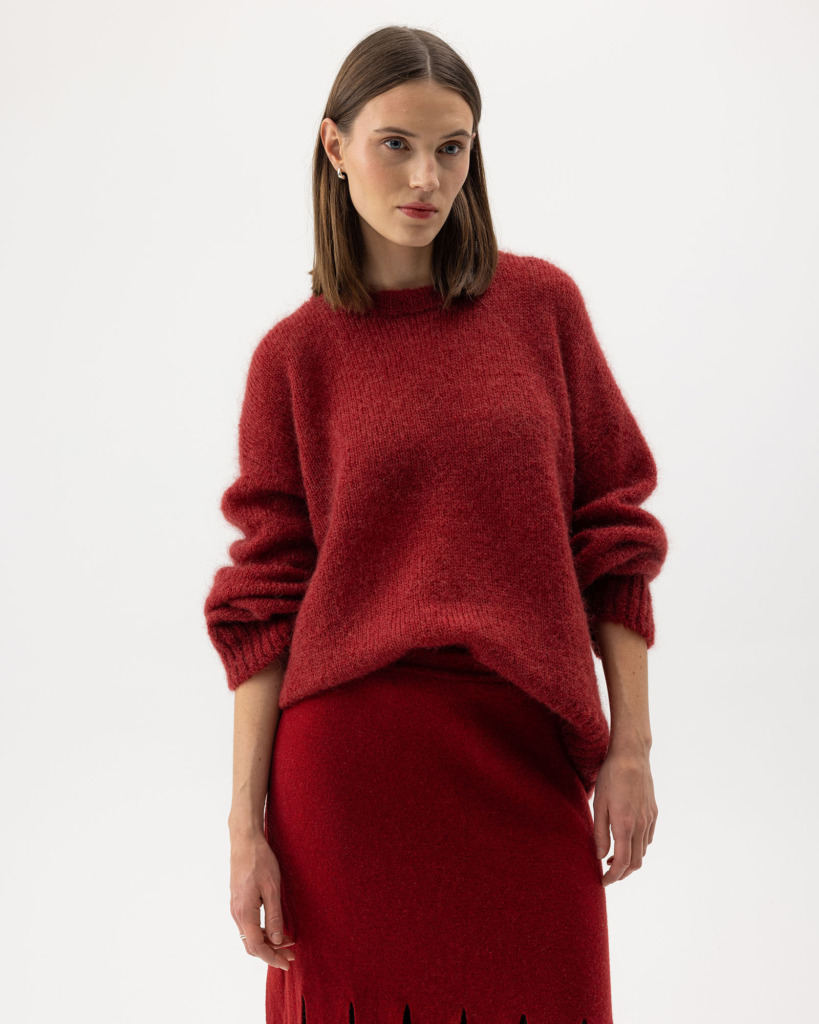
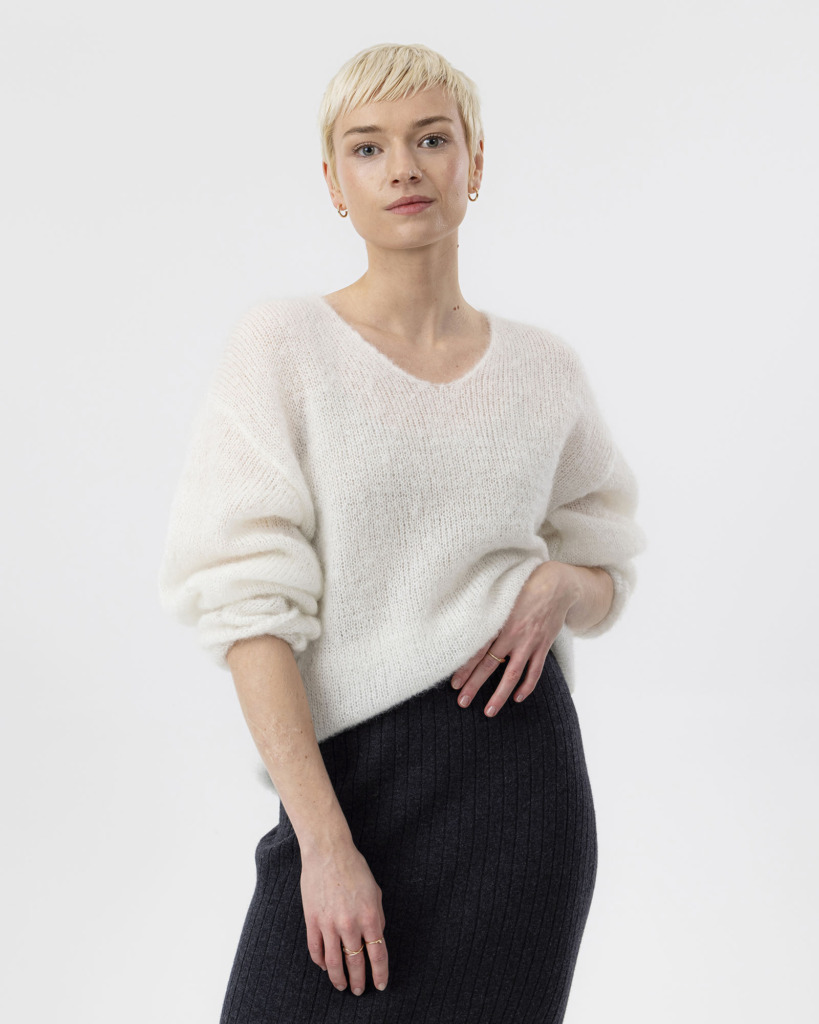
When maximum warmth without heavy bulk is the goal, alpaca wool is an outstanding choice. Alpaca fibers feature a unique semi-hollow core that traps air, delivering extraordinary thermal insulation. To see how alpaca compares to other luxury materials, read our detailed comparison of alpaca and cashmere.
A major benefit of alpaca wool is its naturally hypoallergenic profile: the fibers contain no lanolin and feature a sleek, scale-free surface. This makes alpaca ideal for anyone whose skin reacts to standard wool with itching or redness. Indulgently warm and soft, these knits are suited for cool evenings by the sea or relaxed outdoor leisure. Discover the collections in our feature guides on women’s alpaca clothing and men’s alpaca sweaters.
When selecting your knitwear, consider how each fiber’s unique characteristics align with your daily routine and comfort preferences:
| Feature | Merino Wool | Mohair | Alpaca Wool |
|---|---|---|---|
| Softness | Exceptionally soft and flexible | Soft and fluffy | Silky and smooth |
| Warmth | Good; temperature-regulating | Very good (lightweight) | Superior (highly insulating) |
| Itch / Prickliness | Minimal to none | May feel slightly textured due to long fibers | Hypoallergenic / Virtually none |
| Durability | Strong and elastic | Remarkably durable | Very high |
| Pilling Tendency | Moderate | Low | Very low |
| Care | Wool cycle machine wash / Hand wash | Hand wash / Delicate wool cycle | Hand wash / Delicate wool cycle |
Finding the ideal knitwear comes down to your environment and intended use:
For a broader overview of luxury textiles, consult our comprehensive clothing fabric guide. Explore our full range in the women’s knitwear and men’s knitwear collections.
High-quality wool garments will remain mainstay pieces in your wardrobe for years with proper care. Wool fibers possess natural self-cleaning properties, meaning frequent laundering is rarely necessary—airing your garment out in fresh, damp air is often all that is needed to refresh it.
When washing becomes necessary, turn the garment inside out and hand wash or use a gentle wool cycle in lukewarm water (up to 30°C). Always use a dedicated pH-neutral wool detergent, and avoid standard fabric softeners or bleach. Never hang a wet wool sweater on a coat hanger or dry it in a tumble dryer; instead, gently press out excess moisture between towels and lay the garment flat to dry.
For step-by-step garment care instructions, visit our wool garment care guide.
Select your premium knitwear pieces at Nautical Store and enjoy natural warmth in every season. Subscribe to our newsletter at the bottom of the page to enjoy 10% off your first purchase, alongside updates on new arrivals and styling tips!